How Much Does a Kitchen Renovation Cost per Square Metre?
 Nicole Bickley
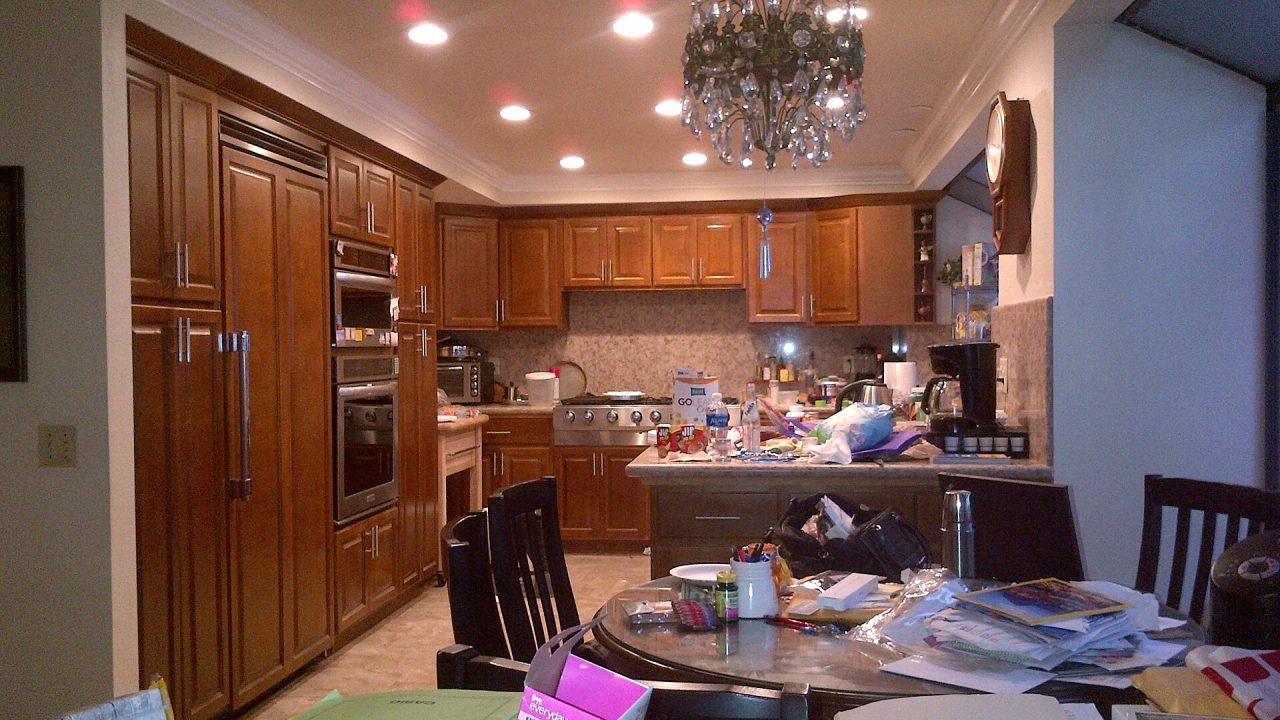
Cost per square metre is a poor unit for a kitchen, because the price is driven by the number of services that move and the length of the cabinet run, not by floor area. A six square metre kitchen with a relocated sink can cost more than a fourteen square metre kitchen where everything stays in place.
For budgeting, mid-market full replacements in North America and Western Europe land between 700 and 1,600 per square metre of floor, with the spread explained almost entirely by three items: service relocation, worktop material and appliance tier. Those three account for roughly half the variance between two quotes for the same room.
Why is cost per square metre misleading for kitchens?
Because a kitchen is a plumbing job, an electrical job and a joinery job sharing one small room. The joinery scales with the run of cabinets. The plumbing and electrical scale with how far pipes and cables have to travel, which has almost nothing to do with floor area.
A compact galley with a relocated sink, a new gas line and six extra circuits can pass 20,000. A larger room where the sink, hob and consumer unit stay put can come in under 12,000. Same trades, different distances.
What does a mid-market kitchen actually cost in total?
In the United States, a full mid-range replacement of 200 square feet averages 26,000 to 40,000, and the same job in the United Kingdom runs 12,000 to 25,000 pounds depending on region and whether the room is stripped to brick.
Those totals assume the layout stays. They exclude structural work, extensions, and any wall that turns out to be load bearing. Add 15 to 30 percent if the ceiling comes down or the floor structure is exposed.
Which parts of a kitchen cost the most?
Cabinetry and worktops together take 35 to 45 percent. Labour takes 20 to 30 percent. Appliances take 10 to 20 percent. The remainder is services, finishes and waste removal.
The ordering surprises people. Cabinets look like the expensive item and are, but the two trades most likely to blow a budget are electrical and gas, because neither can be priced properly until the wall is open.
How much does moving the sink or hob add?
Moving a sink within the same wall costs 400 to 1,200 for new supply and waste runs. Moving it across the room, especially onto a solid floor, costs 1,500 to 4,000 once the floor is opened and made good.
Moving a gas hob is a separate matter. It requires a registered gas engineer in most jurisdictions, a new flue or ventilation path, and often a pressure test on the whole run. Budget 800 to 2,500, and expect the schedule to depend on that engineer’s availability, not yours.
What does labour account for in a kitchen renovation?
Between a fifth and a third of the total, and it is the line most likely to be understated in a cheap quote. A fitter who allows ten days for a job that takes fifteen will either walk off or charge you for the difference.
Ask for the labour element as a separate number with a day count. A quote that gives one lump sum and no days cannot be checked, compared or held to anything.
How much should cabinets take of the budget?
Plan on 25 to 35 percent for carcasses and doors. Below 20 percent you are buying flat-pack with limited adjustment; above 40 percent you are paying for door style and interior fittings rather than durability.
Spend the difference on drawer runners and hinges instead of door fronts. A mid-priced cabinet with good hardware outlasts an expensive front on budget runners, and the hardware is what you touch every day.
Where does the worktop budget go?
Laminate runs 30 to 80 per linear metre, quartz and sintered stone 200 to 600, and natural stone 250 to 800 before fabrication and templating. Fabrication, cut-outs and edge profiles can add 30 percent to the slab price.
Sintered surfaces tolerate heat and scratches better than quartz, which tolerates both better than marble. Marble is the material that looks best in a photograph and stains first in a working kitchen.
Do appliances scale with kitchen size?
No, and this is where large kitchens quietly save money. A larger room usually takes the same oven, hob and extractor as a small one, so the appliance line stays flat while the floor area doubles.
What does scale is refrigeration and dishwashing capacity if you add a second unit. Two dishwashers and a separate wine fridge add 1,500 to 4,000 regardless of room size.
What does electrical and plumbing work add to the bill?
A full rewire of a kitchen with ten to fourteen outlets, dedicated appliance circuits and under-cabinet lighting runs 2,500 to 6,000 in most markets. Plumbing alteration runs 1,200 to 4,000 depending on how far the waste has to fall.
Both figures assume the walls are open. Chasing new routes into finished plaster adds roughly 40 percent, because the making good becomes a plastering and decorating job in its own right.
How much does a small kitchen cost to renovate?
A six to eight square metre kitchen with the layout unchanged usually lands between 9,000 and 18,000. The lower end assumes stock cabinets, laminate worktops and appliances that stay.
Below 9,000 the arithmetic only works if you are doing the demolition, the painting and the tile yourself. Labour is not a variable you can compress without doing some of it.
Is a galley kitchen cheaper than an island layout?
Yes, by 15 to 25 percent. A galley needs one run of services and two parallel cabinet lines. An island needs services brought up through the floor, a second ventilation path if there is a hob, and more worktop area.
The saving is not only material. Islands fail inspections more often, because a hob on an island needs a duct route that many rooms do not have.
What hidden costs appear after demolition?
Four recur: failed subfloor, asbestos in old floor tiles or board, wiring that predates earthing, and a waste pipe that runs at the wrong fall. Each adds 800 to 3,000 and each is invisible until the room is stripped.
None of them are unusual in houses over forty years old. A builder who says the risk is low without opening anything is guessing, and the guess is not in your favour.
How much should contingency be on a kitchen?
Fifteen percent on a like-for-like replacement, twenty percent if services move, and twenty-five percent if the room is being stripped to structure or the house is older than 1960.
Contingency is not padding. It is the amount you need to keep making decisions when the third surprise arrives, instead of accepting the cheapest fix because the budget is gone.
Does a cheap quote usually stay cheap?
Rarely. The cheapest three quotes in any tender are usually missing the same four items: making good, waste removal, temporary kitchen provisions, and the electrical certification. Add those back and the ranking usually changes.
Compare quotes line by line against a schedule you wrote yourself, and insist every line is priced or explicitly excluded. An unpriced line is a variation waiting to happen, and variations are priced at the contractor’s rate, not the tender rate.
From here, the useful next step is the sequence itself: which trade arrives first, what has to be finished before cabinets are delivered, and where the schedule usually slips. The guides on trade order and on comparing quotes cover both in more detail.
Related guides
How Long Does a Full Kitchen Renovation Take?
A full kitchen replacement takes six to eight weeks from strip out to snagging, and nine to twelve…
Nicole Bickley
How Many Electrical Circuits Does a Kitchen Need?
A modern kitchen needs a minimum of four dedicated circuits: one for the cooking appliance, one for the…
Nicole Bickley
Can You Move a Kitchen Sink to the Opposite Wall?
Yes, but only if the new position can reach a waste connection with a fall of at least…
Nicole Bickley