How Long Does a Full Kitchen Renovation Take?
 Nicole Bickley

A full kitchen replacement takes six to eight weeks from strip out to snagging, and nine to twelve if services move or the room is stripped to structure. Any promise under four weeks assumes cabinets arrive on day one and nothing unexpected is behind the plaster.
The schedule is not driven by how fast trades work. It is driven by two waiting periods that cannot be compressed: worktop fabrication and inspection availability, which together account for two to three weeks of the total.
What does a week-by-week kitchen schedule look like?
Week one: strip out, protection, services isolated, first fix begins. Week two: first fix complete, inspection, plastering. Week three: plaster dries, floor preparation and levelling, cabinet delivery.
Week four: cabinet installation and scribing. Week five: template, then fabrication. Week six: worktop install, second fix. Week seven: tiling, splashback, decoration. Week eight: appliances, snagging, cleaning.
Which stage takes the longest?
The gap between template and worktop installation, at five to ten working days, is dead time that nothing else can fill. It is also the stage homeowners most often forget to ask about.
Ask the fabricator for the template-to-install window in writing before signing. A quote that omits it is a quote that will not hold its completion date.
Can a kitchen be done in three weeks?
Only with a stock worktop cut on site, cabinets in stock, and no service relocation. That is a real option for a rental turnover or a like-for-like swap, and it is a different product from a full renovation.
The three-week kitchen usually shows at resale in the details: cut edges, no scribe fillers, surface-run cables. Faster is not automatically worse, but it is a trade.
How much does service relocation add to the schedule?
One to three weeks. Moving a sink adds a week; moving a hob adds a week plus the gas engineer’s availability; adding a new circuit adds a day plus an inspection slot.
The three combine badly. A kitchen where the sink, hob and consumer unit all move is a different project from one where nothing moves, and should be scheduled as such.
How long does demolition take?
Two to four days for cabinets, worktop, tiles and flooring. Add two or three days if a wall comes out, and a week if a ceiling comes down and services have to be rerouted.
Demolition is also where discoveries appear, so the schedule should carry a contingency day rather than assume the room is exactly as surveyed.
How long does plastering and drying take?
Plastering two days, drying three to five days depending on thickness and ventilation. Tiling onto fresh plaster before it is dry traps moisture and causes the adhesive to fail.
In winter, with windows closed, drying takes longer. That is a schedule item, not an inconvenience, and it explains a lot of winter overruns.
How long does cabinet installation take?
Two to four days for a typical ten to fifteen unit kitchen, including levelling, scribing and fitting doors and drawers. An island or a bespoke run adds two days.
Add a day if the walls are out of plumb by more than 15mm over the run. Scribing to an uneven wall takes time, and older houses are almost always uneven.
How long between template and worktop installation?
Five to seven working days for quartz and sintered surfaces, seven to ten for natural stone, and same-day for laminate cut on site. The clock starts from the template, not from the order.
Book the template as soon as the base cabinets are fixed. Every day between cabinet install and template is a day added to the end of the project.
How long does second fix and tiling take?
Second fix electrical and plumbing: two days. Splashback tiling: one to two days including grouting. Painting: two to three days including drying between coats.
Tiling and painting overlap badly, so sequence them rather than running them concurrently in the same room. Grout dust on fresh paint is a callback waiting to happen.
What delays a kitchen most often?
Five recur: late cabinet delivery, a worktop template that has to be redone, an inspection booked two weeks out, a missing appliance, and a discovered structural issue. Only the last is genuinely unpredictable.
The other four are administrative. They are prevented by ordering early, confirming dates in writing, and booking inspections before they are needed.
How much contingency time should be allowed?
Twenty percent on the schedule, in addition to the money contingency. An eight-week kitchen should be planned as ten weeks in any commitment you make about moving back in.
Time contingency and cost contingency are not the same budget. A project can be on time and over cost, or under cost and two weeks late, and both hurt in different ways.
Does a larger kitchen take longer?
Slightly. Cabinet installation scales with the number of units, so a twenty-unit kitchen adds three to four days over a twelve-unit one. Services and worktop lead times do not scale at all.
That is why a large kitchen is often only ten percent longer than a small one. The fixed waiting periods dominate the total.
Does the schedule change if the kitchen is on an upper floor?
Add three to five days. Everything goes up stairs or through a window, waste goes down the same way, and the delivery window for cabinets becomes a booking with a lift or a crane rather than a doorstep drop.
Worktop slabs are the pinch point. A three metre slab that will not fit the stairwell has to be craned or split, and both options are discovered on installation day unless someone measures first.
How do holidays and deliveries affect the timeline?
Both add days that never appear on a Gantt chart. A two-week trade holiday in August, a cabinet factory shutdown, a bank holiday weekend before the template: each is a known date that should be planned around rather than absorbed.
Ask every supplier for the dispatch date, not the delivery date. Dispatch is the number the schedule can actually be built on, because it is the one the supplier controls.
When can the household use the kitchen again?
Once the sink and hob are connected and the worktop is on, which is typically week six of eight. Before that, a temporary sink and a microwave cover the gap.
Plan the temporary arrangement for the whole period rather than the first fortnight. It is week five, not week one, when the arrangement starts to fail.
Scheduling is inseparable from payment, because stage payments should release on completed stages rather than on calendar dates. The guide on staging renovation payments sets out how the two line up.
Related guides
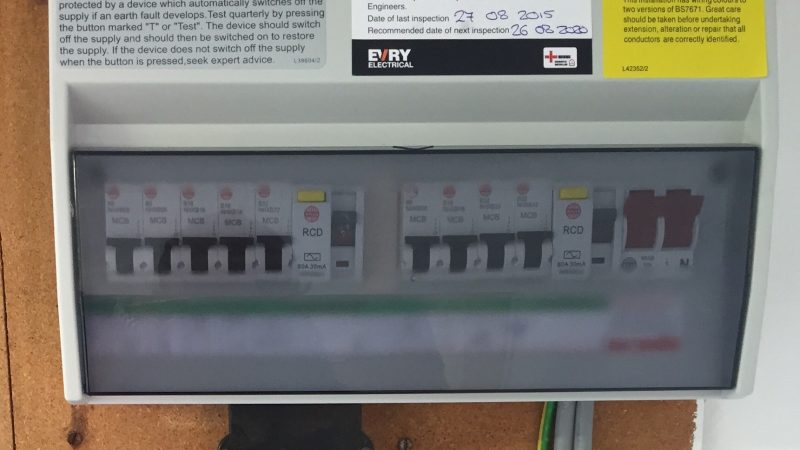
How Many Electrical Circuits Does a Kitchen Need?
A modern kitchen needs a minimum of four dedicated circuits: one for the cooking appliance, one for the…
Nicole Bickley
How Much Does a Kitchen Renovation Cost per Square Metre?
Cost per square metre is a poor unit for a kitchen, because the price is driven by the…
Nicole Bickley
Can You Move a Kitchen Sink to the Opposite Wall?
Yes, but only if the new position can reach a waste connection with a fall of at least…
Nicole Bickley