How Do You Tank a Walk-In Shower Correctly?
 Nicole Bickley
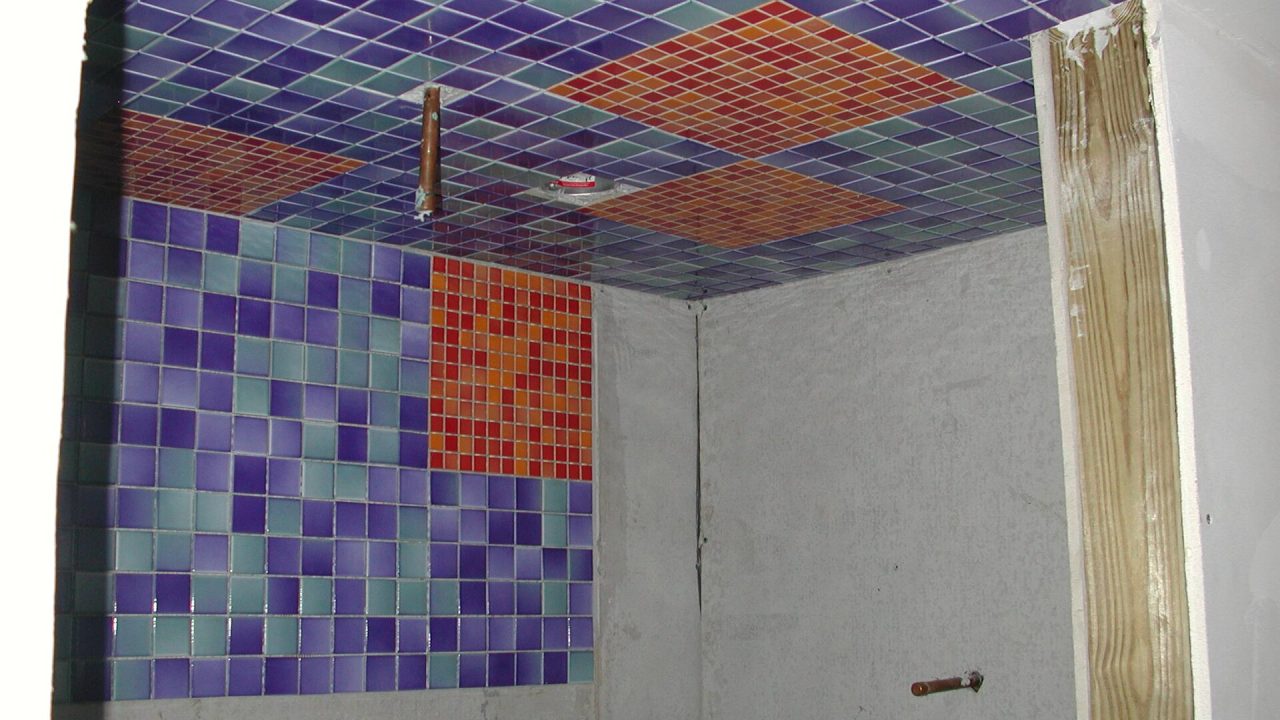
Tanking is a continuous waterproof layer bonded to the substrate, carried up the walls to at least 200mm, sealed into the drain flange, and reinforced in every corner and junction before a single tile is laid. It is not a paint-on extra and it is not a substitute for a fall.
The sequence is fixed: substrate, primer, membrane, reinforcement, membrane, flood test, tile. Any step skipped is a leak that appears six months later on the ceiling below, by which point the only repair is demolition.
What substrates can be tanked?
Cement backer board, tile backer board, sand and cement render, and properly cured screed. Plasterboard is acceptable only in specific systems with a manufacturer’s approval, and never in a commercial wet area.
Timber and plaster are not tankable directly. Both move, and movement cracks the membrane at the junction where water collects.
What thickness should the membrane be?
Liquid membranes are applied to a wet film thickness of 1mm per coat, two coats minimum, giving 1.5 to 2mm dry. Sheet membranes are typically 0.5 to 1mm and rely on the adhesive rather than build.
Buy a wet film gauge. Rolling by feel produces a membrane that is thick in the middle and thin at the edges, which is exactly backwards.
How high should tanking go up the walls?
200mm above the shower floor as a minimum, 1,000mm in the immediate shower zone, and full height where the shower is in a corner or the wall is plasterboard. In a walk-in shower with no enclosure, full height on the wet walls is the safe specification.
Water does not respect the 200mm line. It wicks up behind the tile and appears as a damp patch at waist height a year later.
How are corners and junctions treated?
With a reinforcing tape or fabric bedded into the first coat of membrane, forming a fillet rather than a sharp internal angle. Every internal corner, external corner, pipe penetration and drain junction gets one.
Corners are where movement concentrates. A membrane applied without reinforcement will crack at the corner before anywhere else.
How is the drain flange sealed?
The membrane laps over the flange and is clamped by the drain body, with a bead of sealant under the lap. The flange must sit flush with the substrate, not proud of it.
A drain set proud leaves a gap under the membrane that water reaches but cannot leave. That gap is where the smell comes from.
What is a flood test and is it necessary?
Plug the drain, flood the floor to 20mm, and leave it for 24 hours. Check the ceiling below and the perimeter for damp. It costs a day and it is the only test that proves the membrane works.
Skip it and the first test is the shower itself, after tiling, when a failure means removing the floor.
Does tanking need a primer?
Yes, matched to the substrate and to the membrane manufacturer’s system. Cement board takes a different primer from gypsum board, and mixing systems voids both warranties.
Priming is also the step most often rushed. A membrane over unprimed dusty board bonds to the dust, not the board.
Can you tank over old tiles?
Only if the tiles are sound, thoroughly degreased and keyed, and the manufacturer approves tiling onto tile. In practice, removing the old finish is faster than preparing it properly.
Old tiles also hide the substrate condition. A hollow tile means a failed bed, and a membrane over a failed bed fails with it.
How does tanking interact with the tile adhesive?
The adhesive must be cement-based and compatible with the membrane. Ready-mixed adhesive in a bucket does not cure in a sealed wet area and should not be used.
Use a flexible cementitious adhesive and a full bed, not dot and dab. Voids behind tile hold water against the membrane indefinitely.
What about pipe penetrations?
Each one gets a seal collar bedded in membrane, formed around the pipe with a fillet at the base. Silicone alone is not a tanking detail and will fail at the first movement.
Group penetrations where possible. Every hole is a junction, and junctions are where membranes fail.
How long does tanking take?
Two to three days including primer, coats, reinforcement and drying between coats. Liquid membranes need 4 to 12 hours between coats depending on temperature and humidity.
Add 24 hours for the flood test. Compressing this stage is the most expensive shortcut in a bathroom.
How much does tanking cost?
Materials run 8 to 20 per square metre for liquid systems and 15 to 30 for sheet. Labour adds 20 to 40 per square metre where it is priced separately.
A full walk-in shower with three walls typically costs 250 to 700 in materials. That is a small number against the cost of replacing a ceiling.
What happens if the tanking fails?
Water reaches the substrate, the tile adhesive softens, tiles become hollow, and damp appears on the adjacent wall or the ceiling below. By then the repair is removal and rebuild.
The early warning is a hollow sound when tapping tiles near the drain, or grout that stays dark. Both mean water is already behind the tile.
Does tanking replace the need for a fall?
No. Tanking keeps water out of the structure; the fall moves water to the drain. A tanked floor with no fall holds a permanent puddle against the membrane.
The two work together. A bathroom with one and not the other fails, only more slowly.
What maintenance does a tanked shower need?
Re-seal the movement joint at the wall-floor junction when it hardens or lifts, keep the drain grate clear, and check the silicone at the screen annually. The membrane itself needs nothing.
Most failures attributed to tanking are actually failures of the movement joint above it. That joint is designed to fail and be replaced.
Does tanking go behind the tile or on top of the screed only?
Behind the tile, and continuous with the floor. A floor-only membrane leaves the wall junction as the weak point, which is exactly where shower water sits.
The membrane has to wrap from the floor up the wall as one surface. Two separate membranes lapped at the corner without reinforcement is a joint, not a tank.
Who should do the work?
A tiler or wet room specialist with a documented system and a warranty that covers labour as well as materials. Ask which membrane system they use and read its installation manual before agreeing.
A warranty that covers the membrane but not the installation is worth very little when the leak appears. The labour cover is the part that matters.
Tanking sits inside a sequence that also depends on falls and ventilation. The guide on shower floor fall and the one on bathroom extractor ducting cover the two adjoining details.
Related guides
Can You Put a Bathroom Where There Was No Drainage?
Yes, provided a waste route can reach an existing stack or drain with a 1 in 40 to…
Nicole Bickley
How Long Should a Bathroom Renovation Take?
A full bathroom replacement takes three to five weeks from strip out to snagging, and six to eight…
Nicole Bickley
What Underfloor Heating Works Under Bathroom Tile?
Electric mat systems are the practical choice under bathroom tile, at 100 to 160 watts per square metre,…
Nicole Bickley