What Underfloor Heating Works Under Bathroom Tile?
 Nicole Bickley
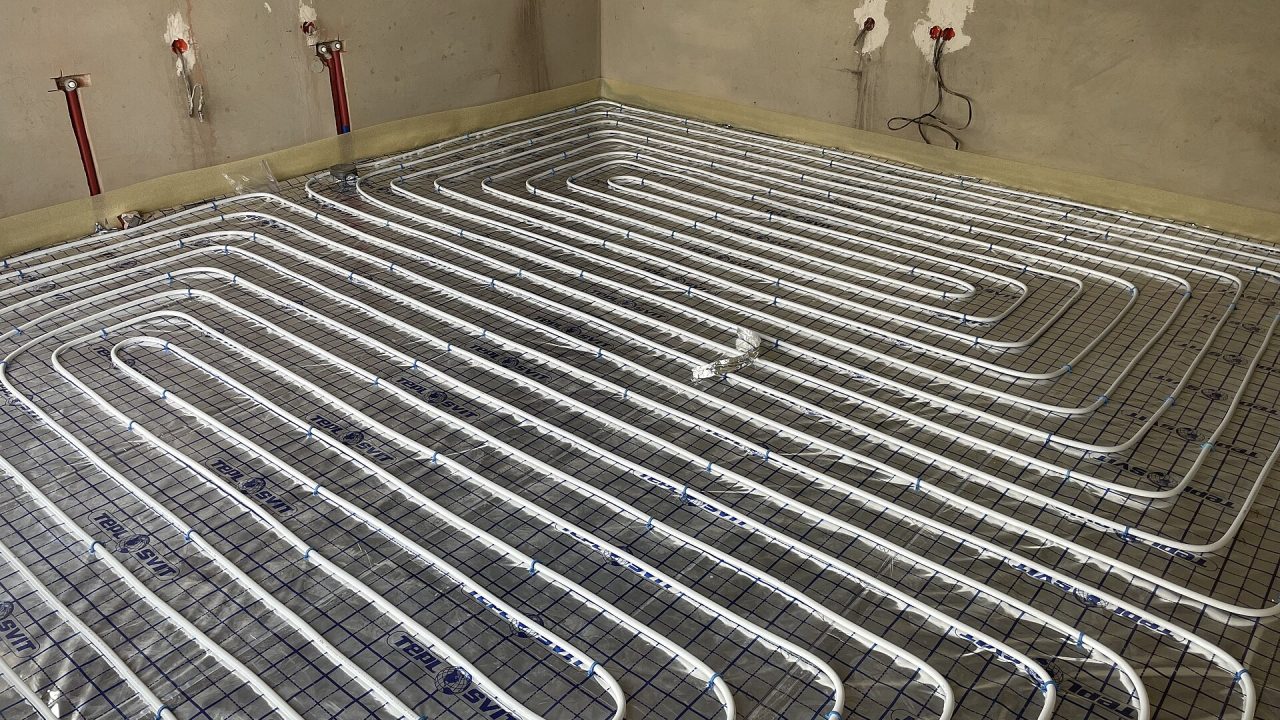
Electric mat systems are the practical choice under bathroom tile, at 100 to 160 watts per square metre, laid on an insulated substrate and covered with flexible adhesive and tile. Water-based systems work but are rarely worth the extra build-up in a room this small.
The decision comes down to floor height and control. An electric mat adds 4 to 8mm; a wet system adds 60mm or more, which usually means lowering the floor or raising the threshold.
Which is better in a bathroom, electric or water?
Electric, in almost every case. The room is small, the load is low, and the installation does not need a manifold, a pump or a boiler connection.
Water systems make sense where the whole ground floor is being heated and the bathroom is part of that circuit. As a standalone bathroom upgrade, they are over-engineering.
How much does an electric mat cost to run?
A 4 square metre mat at 150 watts per square metre draws 600 watts. At average European electricity prices that is roughly 0.15 to 0.25 per hour of operation.
Running it for two hours a morning for six months costs about 60 to 90 a year. The cost is not the issue; the thermostat schedule is.
What substrate does an electric mat need?
A flat, rigid, insulated substrate: cement backer board on timber, or a cured screed on concrete. The mat is fixed to the substrate, then encapsulated in flexible adhesive or self-levelling compound.
Insulation below the mat matters more than the mat’s rating. Heating a concrete slab without insulation warms the slab, not the room.
Can the mat go under the shower?
Yes, if the manufacturer permits it and the mat avoids the drain flange and the fall transition. Keep 100mm clear of the drain and 150mm from walls.
Under a shower floor the benefit is drying rather than comfort. It also helps the grout and silicone last longer.
How much floor height does it add?
4mm for the mat plus 3 to 5mm of adhesive or levelling compound, so 8 to 10mm before tile. A 10mm tile adds its own thickness on top.
In a bathroom with a 20mm threshold, that build-up is the difference between a flush finish and a step.
Does it need its own circuit?
Yes, a dedicated circuit with a residual current device, protected at the rating on the mat’s data plate. A 4 square metre mat at 600 watts needs a 6 amp supply.
The thermostat needs a permanent live and a fused spur, usually positioned outside the bathroom or in a zone where it is not splashed.
Where should the thermostat go?
Outside the room or just inside the door at 1,200mm, away from the shower and away from direct sunlight. A floor sensor is also fitted in the screed or adhesive.
The air sensor and the floor sensor do different jobs. The floor sensor protects the tile from overheating; the air sensor controls comfort.
Can it go under large format tile?
Yes, provided the adhesive bed is full and the mat is fully encapsulated. Large tiles over a partially embedded mat crack at the voids.
Use a flexible cementitious adhesive and back-butter tiles over 600mm. The mat must be flat, not just covered.
What about a levelling compound over the mat?
It is the best way to protect the mat and create a flat bed. Use a fibre-reinforced compound at 3 to 5mm over the mat, and let it cure before tiling.
Never trowel directly over an unprotected mat. A nicked conductor is a dead zone that cannot be repaired from above.
How is the mat tested?
Measure resistance before laying, after laying, and after tiling, and record all three. A reading that changes means a damaged conductor.
Photograph the readings and the mat layout. If a tile has to come up later, the photograph shows where the cable runs.
How long does installation take?
Half a day to lay the mat and thermostat, 24 hours for the levelling compound to cure, then tiling. Total three to four days including the cure before the heating is switched on.
Do not energise the mat until the adhesive has fully cured, typically seven days. Switching on early damages the adhesive bond.
Does it replace the towel radiator?
No, and it is not intended to. A floor at 27 degrees warms the room slowly and cannot dry towels, which is why most bathrooms keep both.
Underfloor heating in a bathroom is a comfort and drying measure. Treating it as the primary heat source leads to a cold room and a large bill.
What maintenance does it need?
None, until it fails. The failure mode is a broken conductor, usually from a drill or a poorly bedded tile, and repair means removing the tile above the break.
That is why the layout photograph and the resistance readings matter. Without them, finding the break is guesswork across the whole floor.
Is it worth it in a small bathroom?
Yes, at 300 to 900 for materials and a day of labour. It is one of the few upgrades that changes how a bathroom feels every morning for a modest cost.
The exception is a bathroom that is only used occasionally, where a heated towel rail delivers more immediate benefit for less money.
What insulation goes below it?
25 to 50mm of rigid insulation board over a concrete slab, or a tile backer board with an insulated core over timber. Without it, most of the heat goes into the structure.
The insulation is the difference between a floor that feels warm in twenty minutes and one that never quite gets there.
Can underfloor heating be retrofitted under existing tile?
Not without removing the tile. A mat needs to be bedded in adhesive directly on the substrate, and there is no way to slide it under a fixed finish.
The retrofit that does work is a low-profile electric mat on top of the old floor, encapsulated and re-tiled. That raises the floor by 10mm and requires the door to be trimmed.
How does the mat interact with the shower former?
The mat is cut and routed around the former, never across the drain or the fall transition. Where the former is pre-formed, the mat stops at its edge and restarts beyond it.
Continuity of the heating is maintained by the manufacturer’s joint kit. A cut conductor joined with tape is a fault waiting for the first heating cycle.
What thermostat settings make sense?
Floor temperature limited to 27 degrees for tile, with an air setpoint of 22 to 24. A floor above 29 degrees feels uncomfortable underfoot and stresses the adhesive.
Use a timer that pre-warms the floor an hour before the bathroom is used. Heating an empty room for six hours costs money and adds nothing.
Does it affect the tile adhesive choice?
Yes. Heated floors move, so the adhesive must be flexible and cement-based, and the grout must be flexible too. Standard grout cracks at the first heating cycle.
Allow a movement joint at the perimeter, under the skirting or tile trim. A floor with no movement joint will find one of its own.
Heating sits on top of the waterproofing and below the tile, so it interacts with both. The guide on tanking a walk-in shower and the one on shower floor fall cover the layers underneath.
Related guides
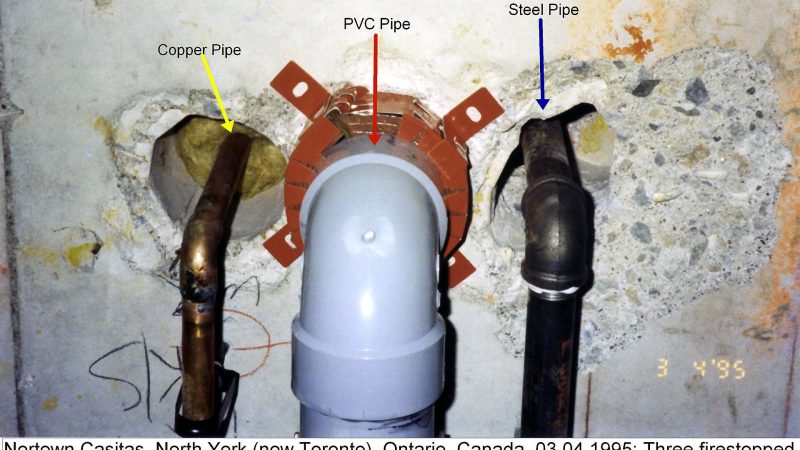
Can You Put a Bathroom Where There Was No Drainage?
Yes, provided a waste route can reach an existing stack or drain with a 1 in 40 to…
Nicole Bickley
How Long Should a Bathroom Renovation Take?
A full bathroom replacement takes three to five weeks from strip out to snagging, and six to eight…
Nicole Bickley
How Do You Tank a Walk-In Shower Correctly?
Tanking is a continuous waterproof layer bonded to the substrate, carried up the walls to at least 200mm,…
Nicole Bickley