What Paint Finish Should You Use in a Bathroom?
 Nicole Bickley
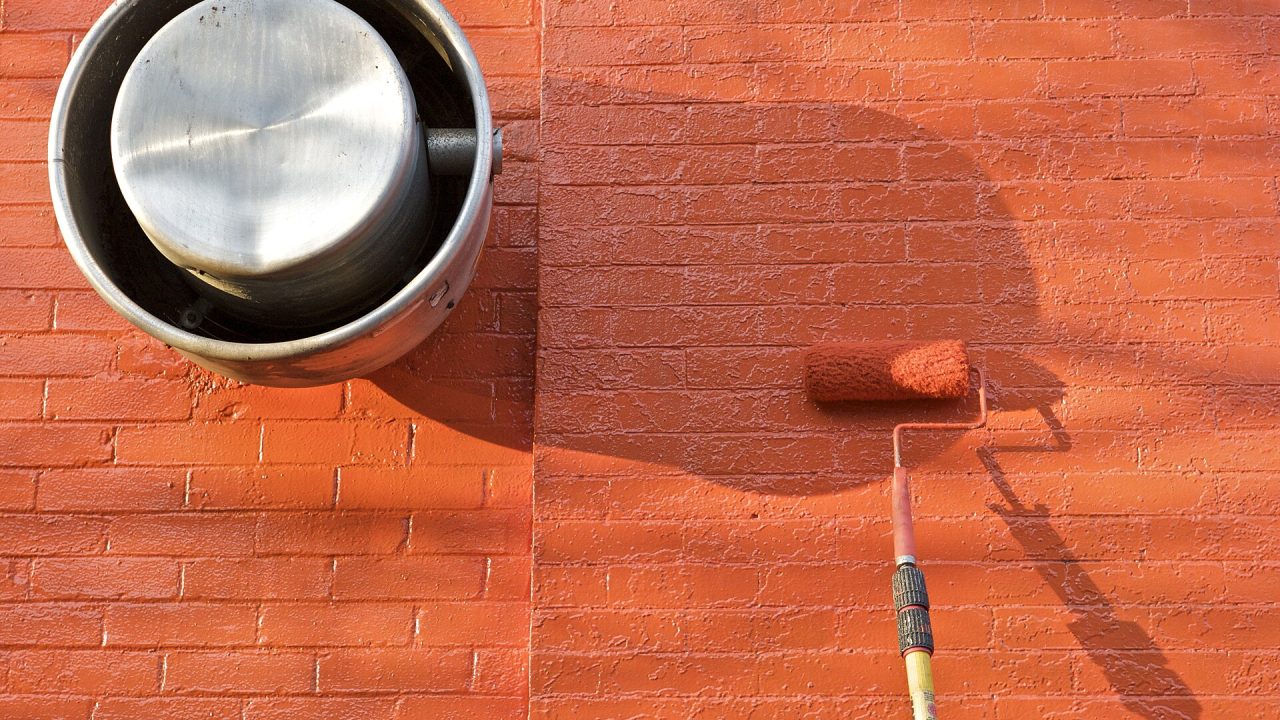
Use a water-based eggshell or satin with a fungicidal additive on walls, a moisture-resistant ceiling paint with the same additive, and an acrylic primer-sealer on any bare plaster. Standard matt emulsion absorbs moisture and grows mould within a heating season.
The sheen level is a functional choice, not a decorative one. Higher sheen means a tighter film, which resists moisture and can be wiped, at the cost of showing surface imperfections.
Why is standard emulsion unsuitable?
Because it is porous. It allows moisture to pass into the plaster and holds it there, which is exactly what mould needs.
A bathroom with a good extractor can survive matt emulsion. A bathroom without one cannot, and the paint is not the real problem.
What sheen should be used?
Eggshell for walls, satin for trim, and a low-sheen ceiling paint. Full gloss on walls shows every ripple in the plaster.
Satin is wipeable and holds up to splashes. It is the practical choice around a basin and bath.
Does the paint need to be mould-resistant?
The additive helps, but it is not a substitute for ventilation. A fungicidal paint in an unventilated room still goes black.
Treat the additive as a delay, not a solution. The fan is the solution.
What about bare plaster?
Seal it with a mist coat of thinned emulsion, or an acrylic primer-sealer, before the finish coats. Bare plaster is highly absorbent and will pull the water out of the paint.
New plaster should be dry before painting, which means four to six weeks for a skim, not two days. Painting damp plaster traps moisture and the finish flakes.
Can tile paint be used?
Yes, on sound tile, with a bonding primer and a two-pack epoxy finish. It is a short-term solution of three to five years and it shows brush marks on a gloss tile.
It works best on a wall that is not in the direct shower spray. On a shower wall it fails at the grout lines first.
How is a bathroom prepared before painting?
Wash with a fungicidal solution, sand glossy surfaces, fill and sand defects, then dust off and prime. Any mould must be treated and killed before painting, not painted over.
Painting over mould seals the spores and they grow through the new film. The stain returns within weeks.
How many coats are needed?
Two finish coats over a primer, and three on a strong colour change. A dark colour over white needs a tinted primer to avoid a fourth coat.
Thin coats dry harder than thick ones. A heavy single coat stays soft and marks.
Does the ceiling need a different paint?
Yes, a ceiling paint formulated for humid rooms, applied in two coats. Ceilings collect condensation first because they are the coldest surface.
A bathroom ceiling painted with contract matt will show mould in the corners above the shower within a year.
What about the window and door?
Satin or eggshell on the woodwork, over an undercoat. Gloss is harder to repair and yellows faster in a humid room.
Water-based trim paints have improved enough to replace solvent gloss in most domestic work. They also stay whiter for longer.
How long before the room can be used?
Seven days for a full cure before heavy condensation, and 24 hours between coats. A shower used the same evening leaves a soft film that marks permanently.
Water-based paints cure faster than solvent, typically three to five days to handle and a week to fully harden.
Can paint stop condensation?
No. Anti-condensation paints contain hollow spheres that slow the formation of droplets on the surface, but the moisture is still in the room.
They are useful on a cold wall in a well-ventilated room. They are not a fix for a ventilation problem.
How much paint does a bathroom need?
Two and a half to four litres for two coats on a typical bathroom, plus a litre of primer and a litre of ceiling paint. Buying one large tin is cheaper than three small ones.
Keep a quarter litre for touch-ups. A year later, the same colour in a new tin may not match after the first has faded.
What is the cheapest mistake to avoid?
Painting before the extractor is commissioned. A room painted and then found to be under-ventilated needs redecoration within a year.
Commission the fan, run it for a week, then paint. The order costs nothing and prevents a repeat.
Do darker colours work in a small bathroom?
Yes, in a room with good light and a large mirror. A dark colour on all four walls in a windowless room makes it feel like a cupboard.
Dark on the wall behind the basin and light elsewhere is the reliable compromise.
How is mould on paint treated?
With a fungicidal wash, left for the specified dwell time, then rinsed. Scrubbing without killing the spores spreads them.
If the mould returns within a month, the moisture source is unresolved and paint is not the answer.
What about a wet room ceiling?
A moisture-resistant board, skimmed and painted with a bathroom ceiling paint, or a fully tanked and tiled ceiling. The board alone is not enough.
Ventilation in a wet room needs to be stronger than in a bathroom with a shower enclosure, because the moisture is not contained.
Which paints are worth the extra cost?
Mid-range trade paints, because they cover better and hold their film. The cheapest emulsion often needs three coats, which erases the saving.
Buy the same brand for primer and finish where possible. Systems are formulated to work together.
Does the paint colour affect mould growth?
Not directly, but darker colours absorb more heat and can raise the surface temperature slightly, which reduces condensation. The effect is small compared with ventilation.
Light colours show mould earlier, which is arguably an advantage. A dark wall hides the problem until it is established.
Can wallpaper be used in a bathroom?
Only a vinyl or a specialist bathroom paper, and only in a well-ventilated room away from the shower. Paper-backed wallpaper peels at the seams within a year in a humid bathroom.
Where wallpaper is wanted, use it on one wall and paint the wet walls. That is the arrangement that survives.
How does paint interact with the extractor?
A room that clears its mirror within five minutes of a shower will keep paint in good condition for a decade. A room that takes twenty will not, whatever the tin says.
Fix ventilation before choosing colour. The guide on stopping mould coming back covers the moisture side in detail.
Paint is the last visible layer and the first to show a moisture problem. The guides on mould prevention and on bathroom extractor ducting cover the causes it reveals.
Related guides
How Do You Specify Grout and Adhesive for Large Format Tile?
Large format tile needs a cement-based, flexible, large-and-heavy-tile adhesive applied as a full bed with a 10mm notched…
Nicole Bickley
Why Do Movement Joints Matter in a Tile Installation?
Because tile, adhesive and substrate all move at different rates, and a movement joint is the only place…
Nicole Bickley
How Much Expansion Gap Should You Leave on a Timber Floor?
Leave a 10mm expansion gap at every wall and fixed obstruction for a domestic room up to six…
Nicole Bickley