What Is the Difference Between Porcelain and Ceramic Floor Tile?
 Nicole Bickley
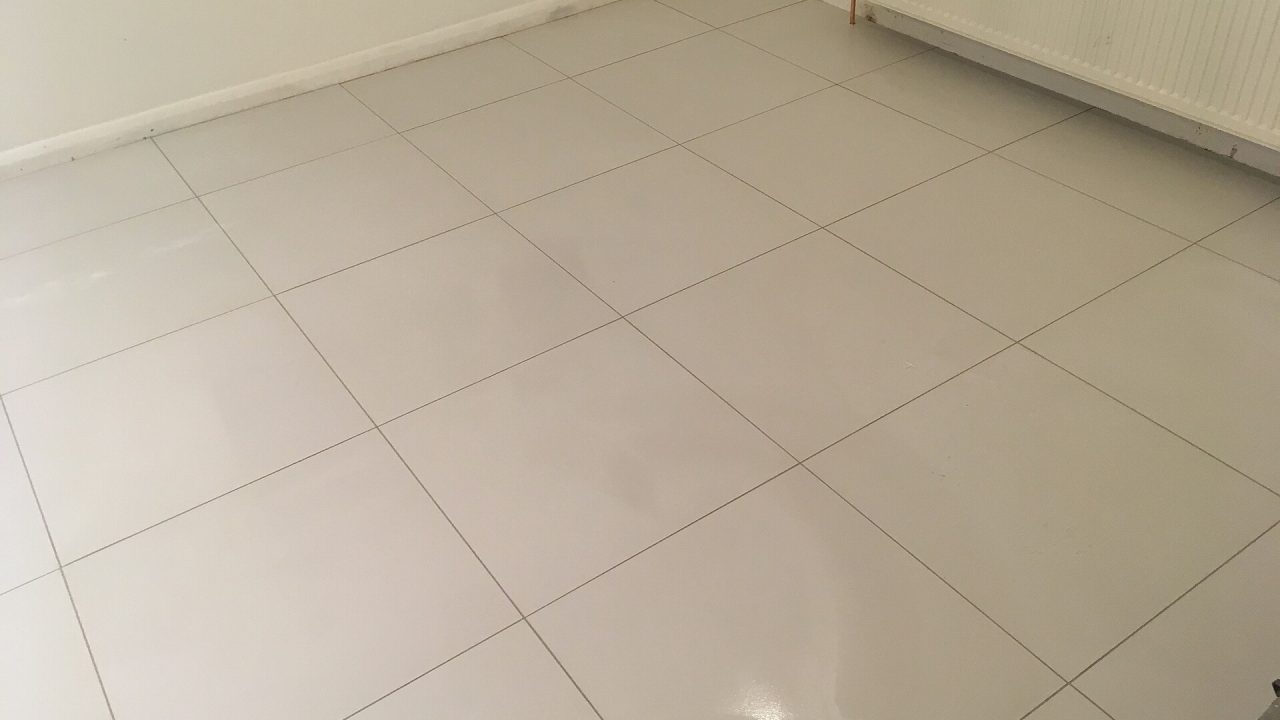
Porcelain is a denser, lower-absorption body fired at a higher temperature, which makes it harder, more frost-resistant and more dimensionally stable. Ceramic is softer, more porous and easier to cut, and it suits walls and light-traffic floors rather than kitchens and hallways.
The practical difference shows in three places: water absorption, breaking strength and cutting behaviour. Everything else, including price, follows from those.
What is the water absorption difference?
Porcelain is classified at 0.5 percent absorption or below, and many products are under 0.1 percent. Ceramic is typically 3 to 10 percent.
Absorption decides frost resistance, stain resistance and whether the tile can be used externally. It is the single most useful number on the box.
Which is harder?
Porcelain, at a Mohs hardness of 6 to 7 compared with 4 to 5 for ceramic. That translates into resistance to scratches from grit and furniture.
Hardness has a downside: porcelain is harder to cut, drill and snap, and it dulls cheap blades quickly.
Which is better in a kitchen?
Porcelain, because of spill resistance and point-load strength. A dropped pan dents ceramic and chips porcelain less often.
The exception is a floor where comfort underfoot matters, since porcelain feels colder and harder. A mat solves it more cheaply than a different tile.
Can ceramic be used in a bathroom?
Yes, on walls, and on floors in low-traffic areas. It needs sealing in wet areas if the absorption is high, and it is more prone to chipping at edges.
For a shower floor, porcelain is the safer choice because the absorption is near zero and the tile is stronger.
How does frost resistance work?
Water absorbed into a ceramic body expands when it freezes and spalls the surface. Porcelain absorbs almost nothing, so it survives freeze-thaw cycles.
For a patio or an unheated conservatory, only a frost-rated porcelain is appropriate. The rating is stated on the technical data sheet.
What about slip resistance?
Both materials can be rated, and the rating is a surface finish rather than a body property. Look for the R rating or the dynamic coefficient of friction.
A polished porcelain is more slippery than a matt ceramic. The finish decides, not the material.
How do they compare on price?
Ceramic is typically 15 to 30 per square metre, porcelain 25 to 80, with large format porcelain well above that. Installation costs are higher for porcelain because of cutting and weight.
The total installed cost difference is often 40 to 60 percent, which is why ceramic remains common on walls.
How does cutting differ?
Ceramic scores and snaps cleanly with a manual cutter. Porcelain needs a wet saw with a diamond blade for reliable straight cuts, and a core bit for outlets.
This is the hidden cost. A tiler who quotes for ceramic and then fits porcelain will either charge more or cut corners.
Which is more dimensionally stable?
Porcelain, which is why it can be made in large formats without warping. Rectified porcelain edges allow 2 to 3mm joints.
Ceramic in large formats tends to bow during firing, which is why larger ceramic tiles often have wider joints and more lipping.
Does porcelain need sealing?
Polished porcelain usually does not, and some matt finishes benefit from an impregnating sealer to reduce staining. Ceramic with a glazed surface generally does not need sealing either.
Grout always needs sealing or a grout with a built-in protector, regardless of the tile body.
How can you tell them apart?
Look at the back and the edge: porcelain is usually a consistent colour through the body, ceramic shows a red or white biscuit under a glaze. Weight is the other clue.
Water absorption testing settles it, but the technical data sheet is faster and more reliable than either.
Which is better for underfloor heating?
Both work, and porcelain conducts heat slightly better and moves less. The adhesive and grout have to be flexible either way.
The substrate flatness matters more than the tile body. A flat floor with ceramic performs better than an uneven one with porcelain.
What about sustainability?
Porcelain is fired hotter for longer, so it carries more embodied energy per square metre. Ceramic is lower, and both are long-lived and recyclable in principle.
Recycled content varies by manufacturer. Ask for the environmental declaration rather than assuming.
Which chips more easily?
Ceramic, particularly at edges and corners, because the glazed surface sits on a softer body. A chipped ceramic tile shows a contrasting biscuit.
Porcelain chips too, but the damage is less visible because the body colour usually matches the surface.
What thickness should be specified?
8 to 10mm for domestic floors, 6 to 8mm for walls, and 20mm for raised or external decking. Thicker is not automatically better; it depends on the substrate and the load.
A 20mm porcelain on a domestic kitchen floor is over-specified and adds cost without benefit.
Can porcelain be used on a wall?
Yes, with a suitable backer board and a mechanical support scheme for large formats. The weight is the constraint, not the material.
Check the board rating and use a levelling system. A 25 kilogram tile sliding down a wall is an expensive afternoon.
Which lasts longer?
Both last decades if installed correctly. Porcelain survives harsher conditions, and ceramic survives gentler ones for less money.
Installation quality decides the lifespan more than the body. A well-laid ceramic outlasts a badly laid porcelain.
Does porcelain need a different adhesive?
Yes, a cement-based adhesive with improved adhesion, because porcelain has almost no porosity for the adhesive to key into. The same applies to fully vitrified tile.
Without it, the bond fails at the tile face rather than at the substrate, and whole tiles lift rather than crack.
Which is better for a hallway?
Porcelain, because point loads from shoes, bags and furniture legs concentrate in a small area. Ceramic in a hallway chips at the traffic line within a few years.
The exception is a period property where the floor needs to be level with an adjoining room. The thinner ceramic sometimes makes that easier.
What does a rectified edge mean?
That the tile has been cut after firing so the edges are straight and uniform, allowing narrow joints. It says nothing about the body material and it is often confused with quality.
A rectified ceramic still absorbs water and still chips more easily than porcelain. The edge finish is about setting-out, not performance.
What is the practical rule?
Porcelain for floors, wet areas, external use and high traffic. Ceramic for walls and low-traffic floors where budget matters.
Then read the technical data sheet for absorption, slip rating and frost resistance before ordering. The guide on large format tile adhesive covers what changes when the tile gets bigger.
The tile body is only half the specification; the adhesive, grout and substrate decide the rest. The guides on large format specification and on wet room substrates cover the other half.
Related guides
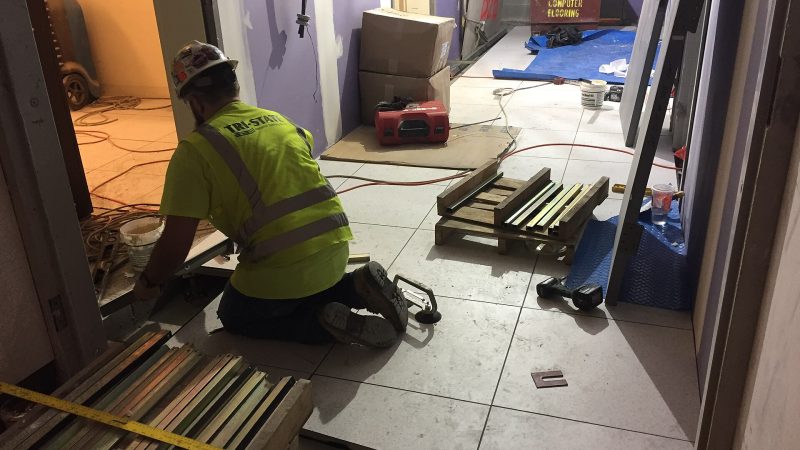
How Do You Specify Grout and Adhesive for Large Format Tile?
Large format tile needs a cement-based, flexible, large-and-heavy-tile adhesive applied as a full bed with a 10mm notched…
Nicole Bickley
Why Do Movement Joints Matter in a Tile Installation?
Because tile, adhesive and substrate all move at different rates, and a movement joint is the only place…
Nicole Bickley
How Much Expansion Gap Should You Leave on a Timber Floor?
Leave a 10mm expansion gap at every wall and fixed obstruction for a domestic room up to six…
Nicole Bickley