What Is the Right Height for a Shower Niche?
 Nicole Bickley
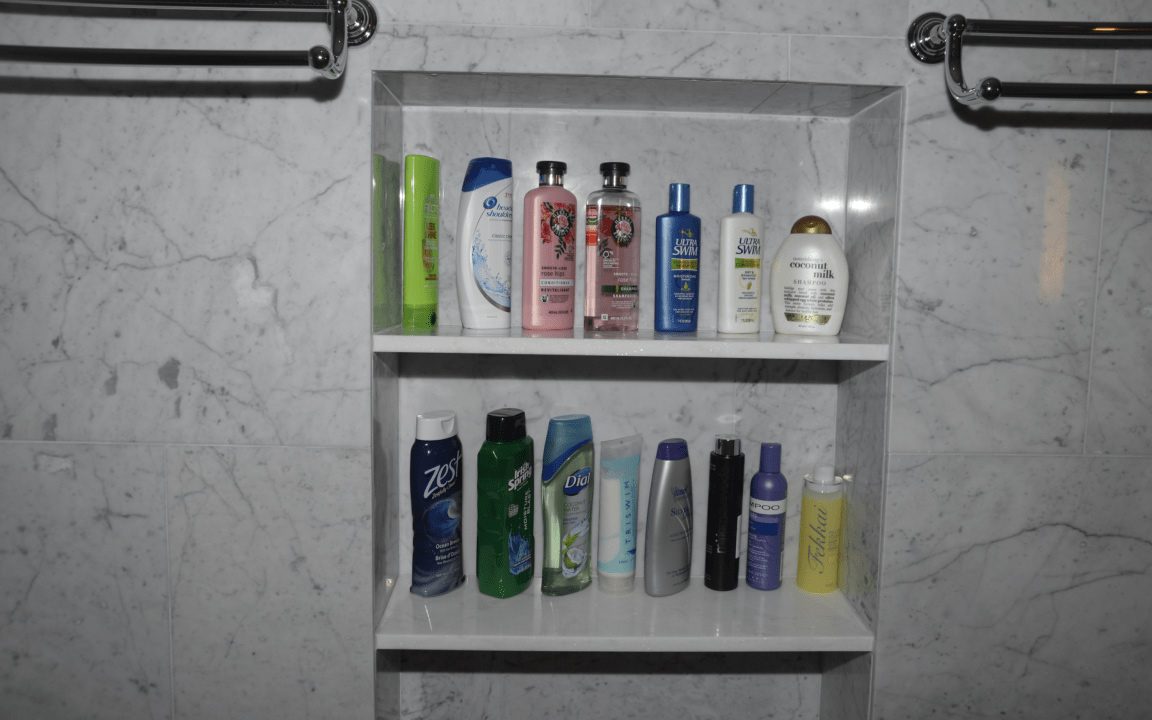
A shower niche should sit with its base at 1,000 to 1,200mm above the finished floor and its top no higher than 1,800mm, so that it is reachable without bending and does not collect spray from the shower head. A 300mm tall by 600mm wide opening holds what a shower actually needs.
The height that matters most is the base. Below 900mm the niche fills with water; above 1,300mm it is above eye level for most adults and gets used for decoration rather than shampoo.
How deep should a niche be?
100 to 120mm of usable depth, which means a 125mm stud wall or a formed block recess. Deeper niches collect water at the back and are harder to clean.
In a solid wall, chasing a 120mm recess is a structural question. In a stud wall, it is a matter of framing a box between the studs.
Can you put a niche in an external wall?
Only with insulation maintained and a vapour-tight build-up. Cutting a recess into an insulated external wall creates a cold spot exactly where water sits.
Most external walls cannot take a niche without redesigning the wall. Use a surface-mounted recess or a corner shelf instead.
How many niches does a shower need?
One is usually enough: 600mm wide, 300mm tall, split into two shelves if the family has a lot of bottles. Two niches in a small shower make the wall look like a shelving unit.
A single long niche at 900mm wide reads better in a large walk-in shower than three small ones, and it is easier to tank.
How is a niche waterproofed?
The same as the rest of the shower: backer board, membrane, reinforcing tape at all four internal corners, and a fall on the bottom shelf of 2 to 3 degrees towards the room.
The niche is the highest-risk area in a shower because it has four corners and a horizontal surface. Tank it as carefully as the floor.
Should the niche shelf slope?
Yes, 2 to 3 degrees forward. A level shelf holds a film of water that eventually finds the grout line at the back.
The slope is invisible at that angle but it is the difference between a shelf that dries and one that stains.
What tile works best inside a niche?
The same tile as the wall, cut to fit, or a contrasting mosaic. Mosaics are easier to slope and to wrap around the corners because the mesh follows the shape.
Large format tile in a niche produces many cuts and visible lipping. A 600mm tile in a 300mm niche means a visible joint in the middle.
How are the edges finished?
With a metal trim, a mitred tile edge, or a solid surface shelf. A raw tile edge is sharp and porous, and silicone alone does not make an edge.
Mitred edges look best and cost the most in labour. Trim is quicker, cheaper and looks deliberate if the profile matches the tap finish.
Can a niche be added after tiling?
Only as a surface-mounted box or a corner shelf. Cutting into a finished tiled wall destroys the waterproofing around the opening, and the repair is visible.
Retrofit niches exist in stainless and composite and are screwed and sealed onto the surface. They look like an addition, because they are one.
How much does a niche cost to build?
80 to 250 in materials and labour during a renovation, plus tiling time. As a retrofit, 150 to 400 for a surface-mounted unit.
The cost is mostly labour, because the framing, tanking and cutting are all fiddly. It is cheap to do during a build and expensive afterwards.
Does a niche need a light?
Not necessary, and adding one means a cable in a wet zone with the associated protection and zoning rules. If light is wanted, use a low-voltage unit rated for the zone.
A niche in shadow reads as a dark hole. Good general lighting in the shower area solves it without adding electrical complexity.
Where should the niche sit horizontally?
Centred on the shower valve or offset to the side away from the spray. Centring on the valve looks tidy; offsetting keeps bottles out of the direct jet.
In a walk-in shower, put it on the wall the user faces when reaching in. That is usually the side wall, not the back wall.
Can a niche replace a shower caddy?
Yes, and it is the better solution. A caddy hangs on the screen, traps water against the glass and rusts at the joints within two years.
A niche also keeps bottles off the floor, which is the main cause of slip incidents in a shower.
What about a bench with storage instead?
A bench is useful in a large walk-in shower and costs more to build. It gives a seat and a shelf, but it also creates a horizontal surface that needs a fall and careful tanking.
For a shower under 1,200mm wide, a niche is the more efficient use of space.
How does a niche affect the tile layout?
It has to be planned into the setting-out, not cut afterwards. A niche that lands mid-tile produces a sliver of cut tile at one edge.
Set out the tile first, then position the niche so its edges align with a grout line. That single decision is what makes a niche look built-in rather than added.
Is a niche worth it in a rental?
Yes, if the bathroom is being tiled anyway. It costs little at that stage and removes the caddy that tenants replace every year.
It is not worth opening a finished wall for. The retrofit version is cheaper and reversible.
What goes wrong most often?
The bottom shelf is level, the tanking corners are not reinforced, and water sits in the niche until the grout fails. The second most common is a niche positioned so the shower head sprays directly into it.
Both are design errors, not installation errors, and both are free to avoid on the drawing.
Does a niche affect the shower screen position?
It can. A niche that projects 120mm into the shower reduces the clear opening, and a hinged screen needs clearance to swing.
Check the screen swing against the niche before framing. That conflict is usually discovered when the glass arrives.
What is the simplest alternative?
A corner shelf at 1,100mm, or a recessed shelf unit in a purpose-made backer board. Both are quicker than a framed niche and both can be tanked in the same operation.
For a small shower, a single corner shelf holds what is actually used daily. The rest of the bottles live in a cupboard, which is where they belong.
Niche details sit inside the waterproofing sequence, so the guide on tanking a walk-in shower is the natural next read. Tile setting-out is covered in the guide on large format tile adhesive.
Related guides
Can You Put a Bathroom Where There Was No Drainage?
Yes, provided a waste route can reach an existing stack or drain with a 1 in 40 to…
Nicole Bickley
How Long Should a Bathroom Renovation Take?
A full bathroom replacement takes three to five weeks from strip out to snagging, and six to eight…
Nicole Bickley
What Underfloor Heating Works Under Bathroom Tile?
Electric mat systems are the practical choice under bathroom tile, at 100 to 160 watts per square metre,…
Nicole Bickley